Our Design Process

Why we built planners you can restart anytime

We are the Design Image Team. We set out to create organizational tools that don't demand perfection, consistency, or a flawless working memory.

Created by Design Image Digital, a digital design and marketing company established in 2003. Our team creates practical digital products designed around clarity, usability and real-life routines.

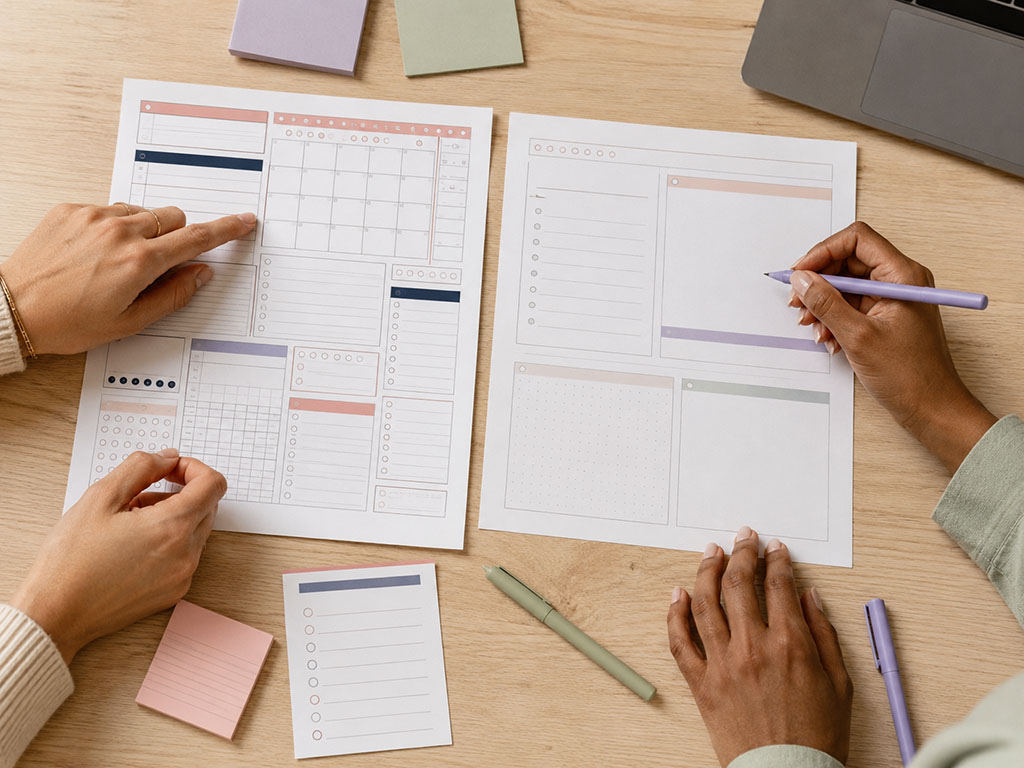
Design Image team working on planner layouts at a desk

The rigid planner trap

Many traditional planners assume consistent daily use and rely on tightly packed, pre-dated pages.

Through our team's lived experience with neurodivergence, and by listening to feedback from adults seeking ADHD-friendly tools, we noticed a common cycle: the guilt of the blank page.

If you miss a few days, a traditional planner becomes a physical reminder of "failure." The system breaks down, and the planner ends up in a drawer. We knew the design itself needed to change.

What we left out:

  • Pre-dated weekly spreads that expire.
  • Cluttered pages with too many tracking boxes.
  • Complicated priority systems that can make choosing the next step harder.

Designing for the real world

Our goal as digital product designers was to strip away the friction and create practical, low-pressure entry points to getting things done.

Visual Clarity

We utilized plenty of white space and clear visual hierarchy. A cluttered page can place additional demands on attention and working memory. We designed layouts that help the eye focus on one step at a time.

Modular Organization

Instead of forcing everything into one giant binder, we broke the planners down by category (Focus, Cleaning, Routines). This allows you to pick up only the exact tool you need on a difficult day.

Guilt-Free Restarting

Every template is undated and independent. If you put the planner down for three weeks, you can pick it back up without having to flip past empty pages. Every day is a fresh, clean start.

Evolution of a layout

How user feedback shaped our final designs.

Early Layout

Included time-blocking from 6 AM to 10 PM, strict habit trackers, and high-density text.

What Feedback Revealed

"If I wake up late, the whole day feels ruined." "Too many boxes to check makes me anxious."

The Improved Version

Removed timestamps. Switched to broad "Morning/Afternoon/Evening" blocks. Emphasized "Top 3" priorities over endless lists.

Comparison showing a cluttered early planner layout next to our simplified final version

A practical planning tool—not medical treatment

We are designers, not clinicians. These planners were created to be a supportive organization resource based on established information and community feedback. They are meant to complement your life, not treat a medical condition.

Information we consulted

Our understanding of ADHD was informed by established resources from organizations including:

We're Listening

Want us to design a different planner?

We are always looking for ways to create better tools. If you have an idea for a planner layout or category that would help your brain, let us know!

Please do not include medical or other sensitive personal information. We will only use your details to review and respond to your suggestion. See our Privacy Policy.